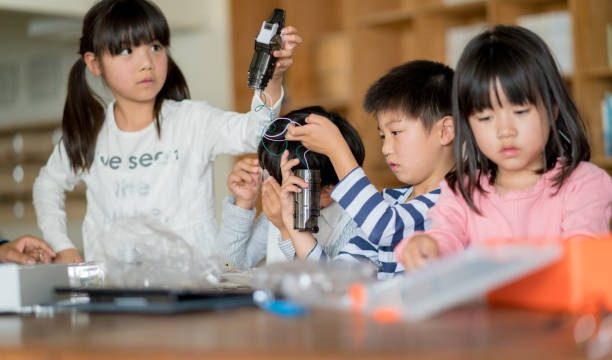
In today’s fast-paced world, where technology continues to shape our daily lives, the importance of fostering critical thinking skills in students cannot be overstated.
One of the most engaging avenues through which young minds can explore these skills is through participation in a robotics club.
These clubs provide a nurturing environment where students not only learn about technology but also grow as thinkers, innovators, and collaborators.
A gentle introduction to creativity
Robotics clubs are often a melting pot of creativity and problem-solving. When students come together to design and build robots, they are encouraged to think outside the box. The process of brainstorming ideas, sketching designs, and iterating on prototypes fosters a creative mindset that is essential for innovation. In these collaborative settings, students learn that there is often no single right answer. Instead, they discover that multiple solutions can arise from the same problem, each with its unique merits and challenges.
As they engage in hands-on activities, students are given the freedom to experiment. This experimentation is crucial; it allows them to understand that failure is a part of the learning process. When a robot doesn’t perform as expected, it’s not just a setback, but an opportunity for discussion and reflection. Students learn to analyze what went wrong, consider alternative approaches, and make adjustments. This iterative process nurtures resilience and adaptability—skills that are invaluable not only in robotics but in all areas of life.
Building connections through collaboration
One of the most beautiful aspects of a robotics club is the sense of community it fosters. Students from diverse backgrounds come together, each bringing their unique perspectives and skills to the table. This collaborative environment encourages them to communicate and share ideas, enhancing their interpersonal skills. They learn to listen actively, value others’ contributions, and work toward a common goal.
Working on group projects helps students understand the importance of teamwork. They must navigate different opinions and approaches, which teaches them to negotiate and compromise. This experience is invaluable, as it mirrors real-world scenarios where collaboration is often key to success. By engaging with peers in a supportive atmosphere, students build lasting friendships and a network that extends beyond the club.
Nurturing critical thinking and problem-solving
At the heart of robotics lies the need for critical thinking. As students design their robots, they must consider various factors: the mechanics of movement, the programming of sensors, and the overall functionality of their creation. This multifaceted approach encourages them to break down complex problems into manageable parts, a skill that is vital in any academic or professional setting.
As they face challenges—be it a coding bug or a mechanical failure—students learn to employ logical reasoning and analytical thinking. They begin to ask questions like, “What if I change this component?” or “How can I optimize my code?” This inquiry-based mindset not only enhances their technical skills but also empowers them to become proactive learners. They learn to seek out information, conduct research, and apply their findings, which reinforces their ability to think critically.
Embracing a growth mindset
The robotics club environment cultivates a growth mindset, encouraging students to view challenges as opportunities for growth rather than insurmountable obstacles. This shift in perspective is transformative. When students understand that intelligence and ability can be developed through effort and perseverance, they become more willing to tackle difficult tasks.
As they progress in their projects, they gain confidence in their abilities. Each small success fuels their motivation, inspiring them to take on more complex challenges. This sense of achievement is crucial for their overall development, as it fosters a belief in their potential. They begin to see themselves not just as students, but as capable innovators who can contribute meaningfully to the world around them.
Fostering a sense of curiosity
Curiosity is a natural driver of learning, and robotics clubs tap into this innate desire to explore and discover. Students are encouraged to ask questions, experiment, and seek out new knowledge. The club often serves as a safe space where they can express their curiosity without fear of judgment.
This environment nurtures their enthusiasm for learning. As they delve deeper into robotics, they may find themselves drawn to related fields, such as programming, engineering, or even artificial intelligence. The excitement of creating something tangible—a robot that can navigate a maze or complete a task—sparks their imagination and inspires them to explore further.
A pathway to future opportunities
Participation in a robotics club can also open doors to future opportunities. The skills developed in these clubs are highly transferable, applicable to various fields in science, technology, engineering, and mathematics (STEM). As students build their portfolios and gain experience, they may find themselves better prepared for internships, college applications, and future careers.
Moreover, the experience of working on projects and presenting their work helps students develop valuable communication skills. They learn to articulate their ideas clearly and confidently, which is essential in any career path they choose to pursue.
In conclusion, the robotics club offers much more than just an introduction to technology. It serves as a nurturing ground for students to grow as thinkers, innovators, and collaborators. Through creativity, collaboration, critical thinking, and curiosity, students learn to embrace challenges and view them as opportunities for growth. The skills they acquire extend far beyond the realm of robotics, preparing them for a future where they can make meaningful contributions to society. By fostering a love for learning and a belief in their potential, robotics clubs play a vital role in shaping the thinkers of tomorrow.